
Beyond the Pattern: What Actually Creates Flow
January 6, 2026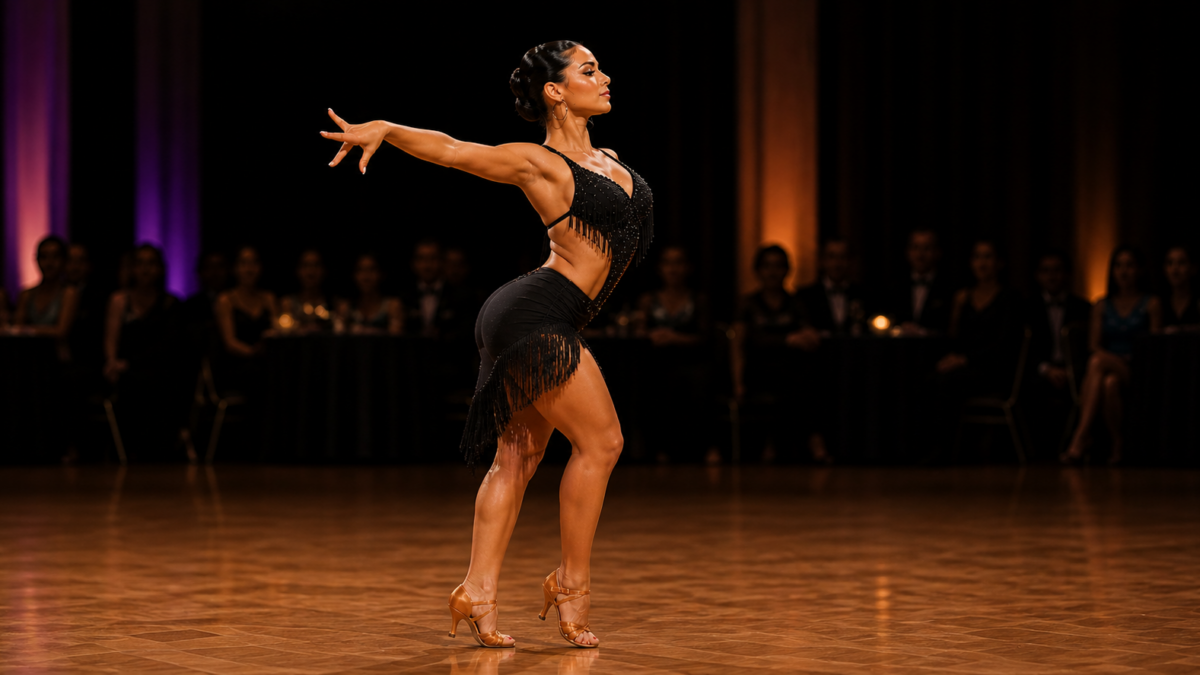
Spend enough time in Latin dance spaces and you start to notice a pattern.
A lot of dancers are standing with an exaggerated arch in their lower back, pelvis tipped forward, almost like they’re trying to push their hips back to create more shape. It’s often intentional. It’s meant to make the movement look bigger, more expressive, more “Latin.” But in a lot of cases, it’s doing the opposite.
To clarify – a small amount of anterior pelvic tilt is completely normal. The pelvis isn’t meant to be perfectly tucked or perfectly flat. It naturally sits at a slight angle, and that’s actually helpful for movement.
The issue is when that tilt becomes exaggerated and constant, especially when it’s being used as a substitute for actual technique. The problem is the default.
There’s decent research across different dance styles showing that increased anterior pelvic tilt tends to go hand in hand with more stress on the lower back, and higher rates of discomfort. That doesn’t mean posture is the only cause of back pain, but it does mean this pattern is worth paying attention to, especially if you’re dancing multiple times a week.
So why does it show up so much specifically in Latin dance?
Part of it is aesthetic. There’s a long-standing idea that more arch equals more movement. It creates a certain silhouette, and from the outside it can look like there’s more happening through the hips.
But a lot of the time, that “movement” is just the pelvis being held in a tilted position. It’s not actually coming from rotation, weight transfer, or control. It’s more of a static shape than real motion.
Another big piece is compensation. Latin movement is subtle and specific. It comes from how you transfer weight, how the pelvis rotates over the standing leg, and how the upper and lower body stay connected without being rigid. If those pieces aren’t there yet, it’s very easy to “fake” the look by arching the lower back and pushing the hips back.
It works visually, at least at first. But it creates problems pretty quickly.
One of the first things to suffer is balance. When the pelvis tips too far forward, your center shifts with it. You’re no longer stacked over your feet in a clean way, which makes turns feel harder and less controlled. If you’re feeling slightly “off,” struggling to pinpoint why, this could be an issue.
It also tends to limit actual hip movement, which is the ironic part. When the lower back is doing the work, the hips don’t have as much freedom to rotate. So even though the shape looks bigger, the movement itself is often smaller and less precise.
And then there’s the lower back. Ouch! If you spend a lot of time in an exaggerated arch, the muscles around the lumbar spine stay engaged in a way they’re not designed to sustain. Over time, that can lead to tightness, compression, and eventually discomfort. Again, it’s not the only cause of back pain in dancers, but it’s a very common contributor.
So what’s the alternative?
Usually when dancers hear this, they try to fix it by tucking their pelvis under or standing up very straight. That just creates a different set of problems. You end up stiff, disconnected, and unable to move naturally.
What you’re really looking for is something closer to neutral. Not frozen, not forced, just balanced.
A simple way to think about it is imagining your pelvis like a bowl of water. If you tip too far forward, the water spills out the front. If you tuck too much, it spills out the back. Somewhere in the middle, it stays level. That’s the idea.
From there, you want a light sense of support through the core, not gripping or bracing, just enough engagement that your ribs and pelvis stay connected. The glutes help too, but again, not by squeezing as hard as possible. More like they’re “on” in the background.
The easiest way to know if you’re in a better place is to test it right away. Walk. Do a basic step. Try a turn. Most dancers feel more grounded almost immediately, and turns usually feel cleaner with less effort.
This isn’t about making your dancing smaller or less expressive. It’s about making it more controlled and more efficient.
The dancers who look the best aren’t the ones holding the biggest shape. They’re the ones who can move in and out of positions without getting stuck in them.
If you’ve been feeling off balance, tight in your lower back, or like your movement isn’t quite doing what you want it to do, this is a good place to start.